
Guides / Receive & adjust stock
Receive stock, adjust levels, and act on low-stock alerts
Sales pull stock down. Deliveries and counts must push it back up—or your shelf numbers lie. F-Biz separates Receive stock (goods arrived) from Adjust stock (set the true on-hand total).
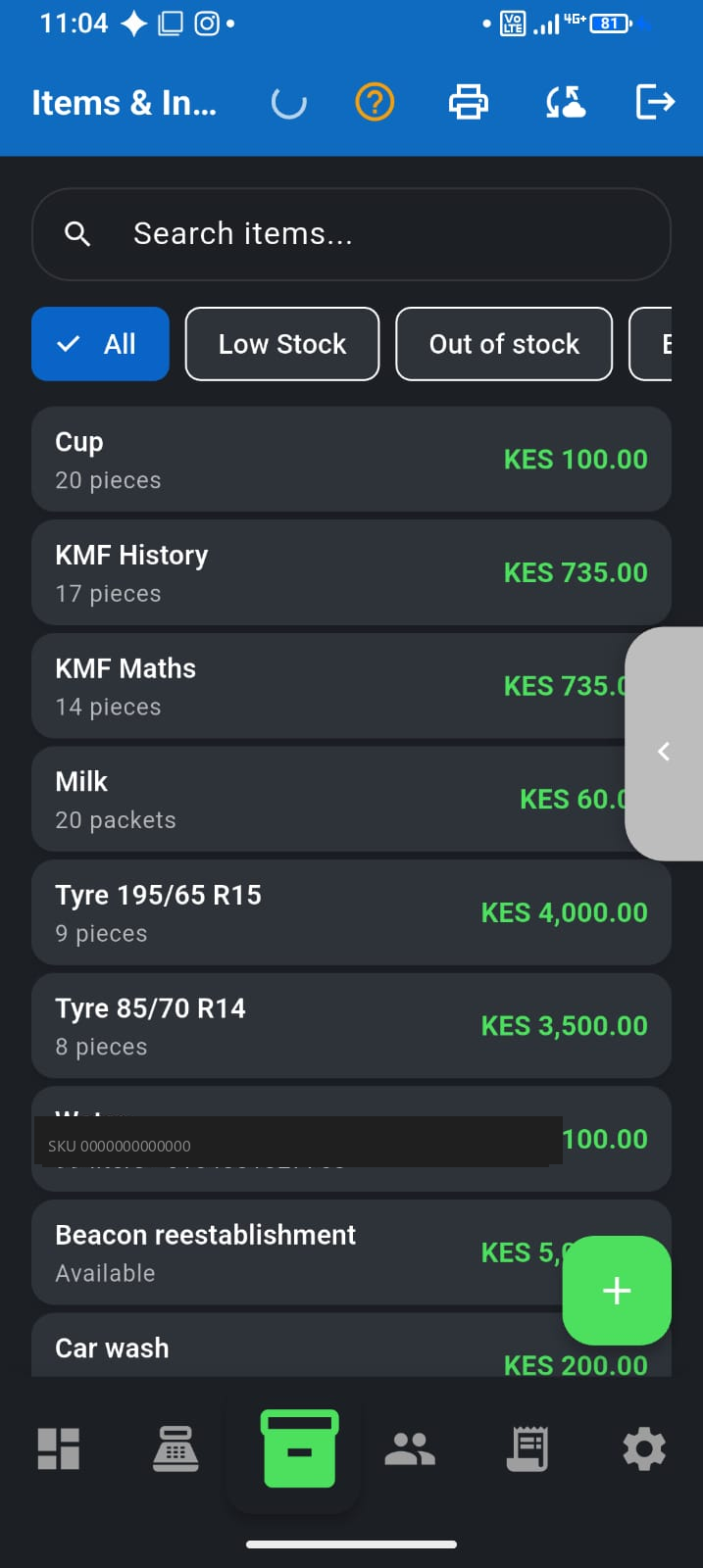
Receive vs adjust — pick the right tool
- Receive stock — supplier delivery or restock arrived. Adds quantity to what you already have. Use for multi-item deliveries; optional batch and expiry when the item needs them.
- Adjust stock — after a count, breakage, or “the number on the phone is wrong.” Sets the total on-hand quantity. For a new expiry lot, receive instead of overwriting with adjust.
Receive a delivery (one or many items)
- Open Items
- Tap Receive stock (list toolbar) — or open one product → Receive stock
- Add each item, enter quantity (and expiry/batch if required)
- Optional note (e.g. supplier name or invoice number)
- Confirm receive — levels rise; sync when you are online
Tip: count the carton before you tap receive. Short-packs become shrinkage if you trust the invoice blindly.
Adjust after a spot-check
- Open the product from Items
- Tap Adjust stock
- Enter the real quantity on the shelf
- Save — the app stores the new total (not “plus one more bag”)
Low-stock alerts that you actually use
- On each fast mover, set a low-stock threshold when you add or edit the item
- Watch Low stock on the dashboard and in Smart Reminders / Hustle Hub
- Weekly habit: open the low-stock list, receive what the wholesaler brought, then sell again with confidence
Start with your top 20 movers—not every SKU. See also duka inventory and fast movers vs dead stock.
Common mistakes
- Selling without receiving the morning delivery — levels go negative or “empty” while cartons sit in the back
- Using Adjust when you meant Receive (overwrites total instead of adding the delivery)
- Ignoring low-stock until the customer is already at the counter
- Never writing off damage — then blaming “theft” for every gap
What to read next
- Stop stock shrinkage
- Find a sale and fix mistakes
- Publish inventory to F-Biz Market — keep the online shelf honest after you receive