
Learn / Sales vs collections
Sales vs money in the till
A busy day can look good on sales and still leave the drawer thin—especially when customers buy on deni and pay later.
The business problem
Monday you sell Ksh 15,000—but Ksh 4,000 is on credit. Tuesday a regular pays Ksh 2,500 of last week’s deni. If you count that payment as a “new sale,” you double-count. If you ignore Monday’s credit sale, you understate how well the shop moved stock.
Why it matters
Sales answer: how much did we sell today (goods left the shelf)? Collections answer: how much cash and M-Pesa actually came in today?
Credit sales belong in sales on the day of the sale. Debt payments belong in collections on the day they are paid— not as a second sale. Mix them and you cannot plan float, stock, or school fees with a straight face.
A simple example
- Mon: Credit sale Ksh 1,000 → Sales +1,000 · Collections +0 · Customer owes 1,000
- Wed: Customer pays 400 → Sales +0 · Collections +400 · Balance 600
- Fri: Pays 600 → Sales +0 · Collections +600 · Balance 0
Same sale once. Three honest money movements. That is staggered deni done right.
Common mistakes
- Adding debt payments into “today’s sales” and celebrating inflated revenue
- Excluding credit from sales so a strong deni day looks quiet
- Waiting for full settlement before recording any payment
- Closing the till without separating checkout cash from debt collected
Best practices
- Record credit (or split cash/M-Pesa/credit) at checkout with a named customer
- When they pay later—even a little—record that payment the same day
- At close, look at Sales today and Collected today as two different numbers
- Use Collected today = money at checkout + debt paid today
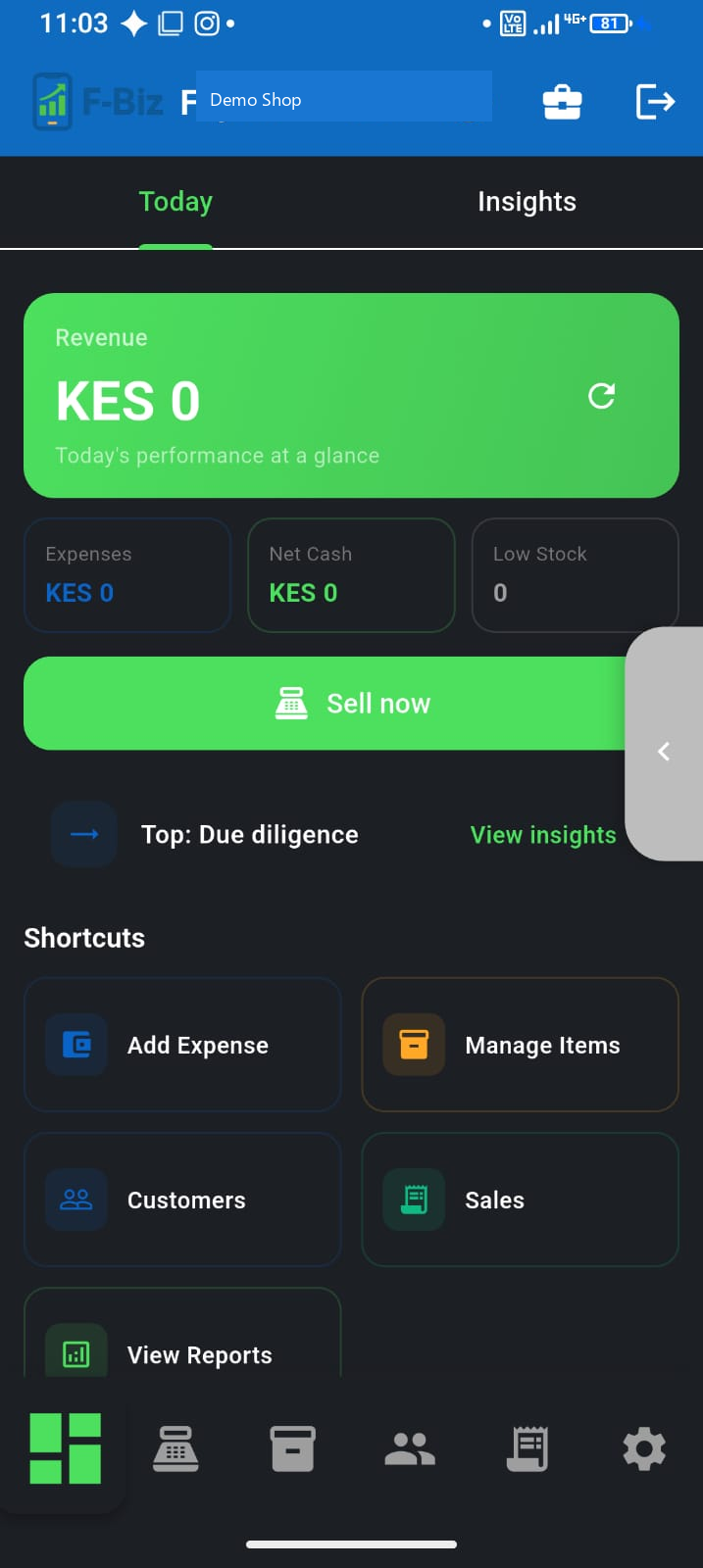
How F-Biz by Fayvad helps
Credit and split tenders still count toward Sales today. Partial debt payments reduce the customer balance and feed Collected today (with a checkout vs debt breakdown)—without creating a fake new sale. Customer detail lets you Record Payment for any amount, or Mark as Paid to clear the rest in one step.
Action to take today
Open the dashboard and compare Sales today with Collected today. If a customer pays even a small deni amount, record it under Record Payment—then watch Collected today rise without Sales jumping twice.