
Learn / Cash vs profit
Cash vs profit for Kenyan shops
The till is full but the wallet feels empty. That gap is usually cash vs profit—not laziness.
The business problem
You closed with Ksh 18,000 in M-Pesa and cash. Tomorrow you owe the wholesaler Ksh 12,000, rent is due Friday, and three customers still owe you from last week. The number in the drawer is not yours to spend.
Why it matters
Cash is what moved today. Profit is what remains after stock, rent, transport, wages, and other costs. Shops that only watch sales reorder too much, discount too deep, and run out of money while looking “busy.”
Common mistakes
- Treating today’s takings as tomorrow’s float and stock money combined
- Ignoring credit sales when judging a “good day”—or counting deni payments as new sales later (see Sales vs money in the till)
- Skipping expenses until month end—then the shock
- Chasing high-volume items with tiny margin
Best practices
- Record every sale at the counter—cash, M-Pesa, and credit
- Log stock purchases and recurring costs when they happen
- Check net cash (collected today minus expenses) before you leave
- Review weekly trends—not only when something feels wrong
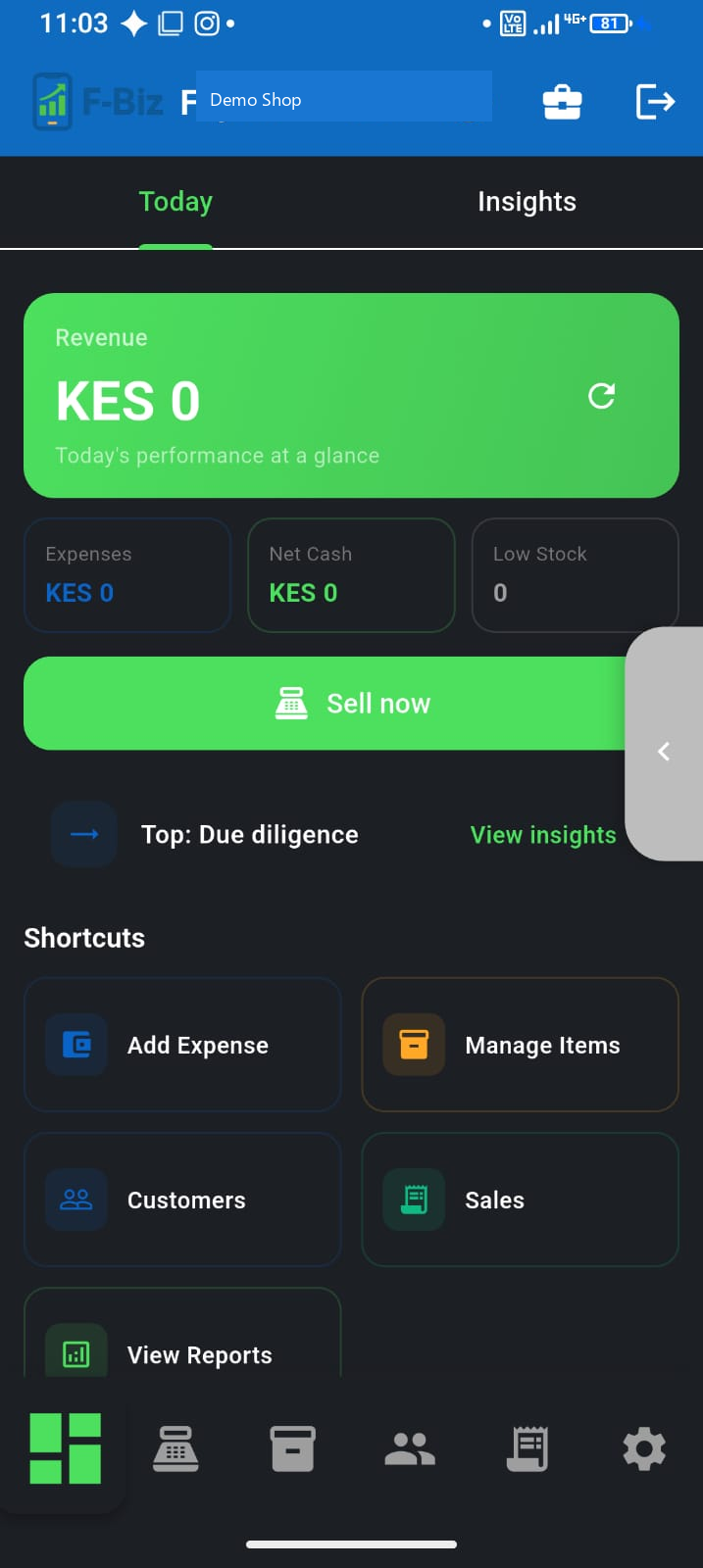
How F-Biz by Fayvad helps
Sales show what left the shelf—credit appears under the hero so you still see deni issued today. Collected today is checkout cash and M-Pesa plus any deni paid back today. Net cash is collected minus expenses: money left in the till after today's spend. Insights shows trends when you are ready to go deeper.
Action to take today
Add one expense you already paid this week (transport, airtime, or stock deposit). Compare net cash to raw sales before you close.